Where it comes from

Three villages, three weaves

We buy cloth directly from the weavers, and sew it in Bangkok. Each bolt spends a week to a month on the loom. Here is what happens along the way.

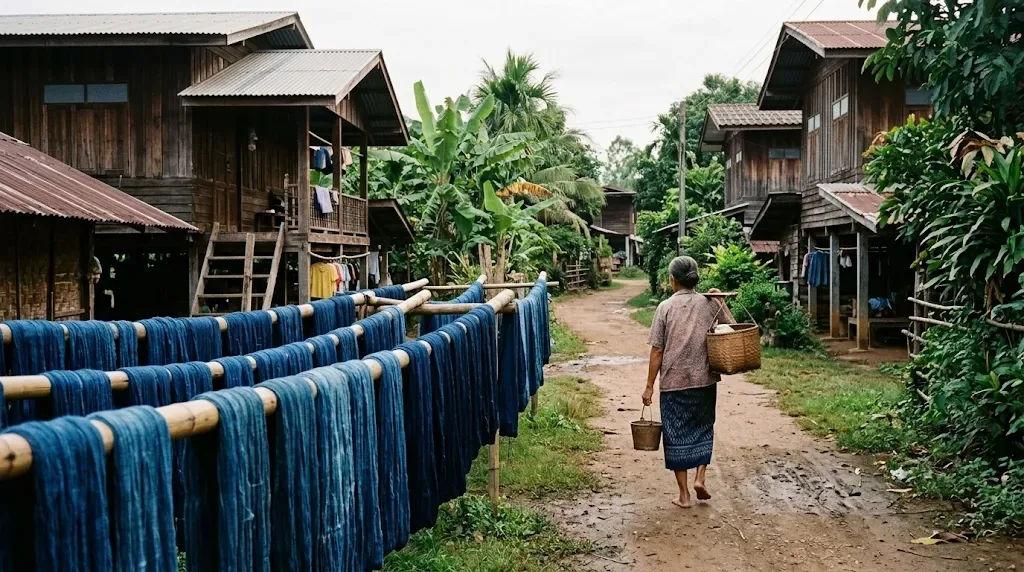
A village lane in Sakon Nakhon in the morning: wooden houses on stilts, indigo-dyed cotton yarn drying on bamboo poles, and a woman walking with a basket
Morning in Sakon Nakhon. The yarn dries after its dip in the vat
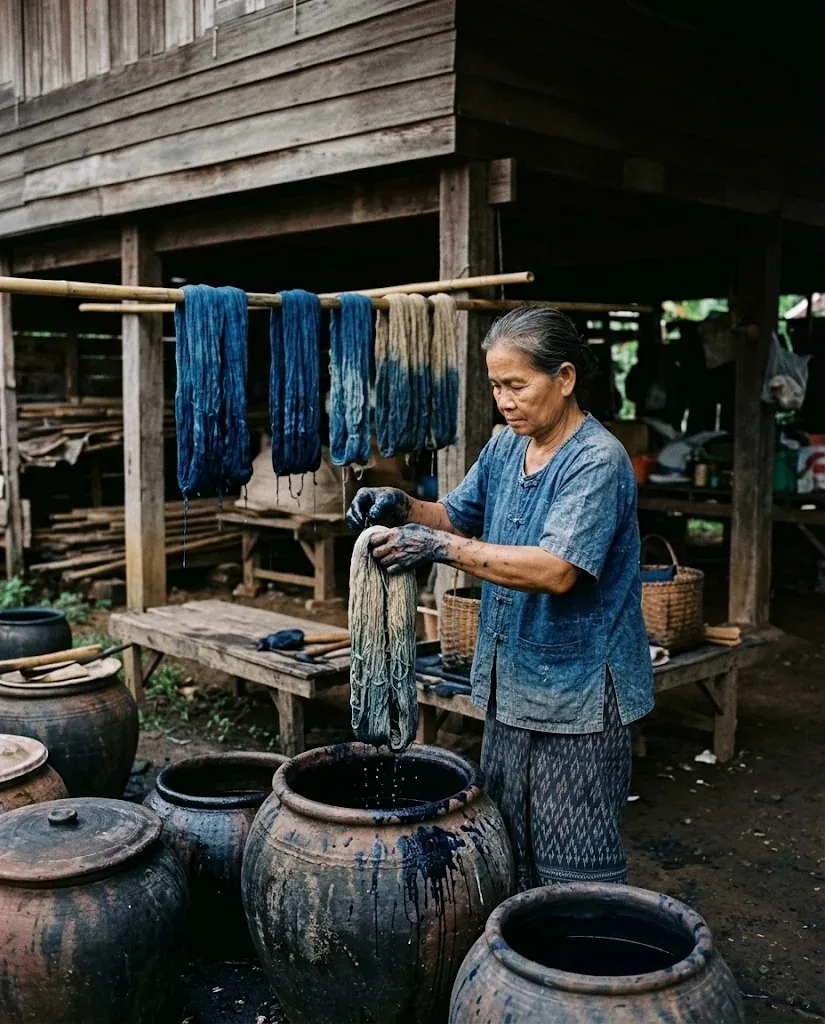
An older weaver with blue hands lifting cotton yarn from an indigo vat in a clay jar, beneath a wooden house on stilts in Sakon Nakhon

Sakon Nakhon, Isan

Indigo

In Sakon Nakhon, cotton is dyed with the leaves of the indigo plant. The leaves soak in water until they ferment, lime goes in, and the result is a blue vat that lives for months. The weavers call it "the vat," and feed it like a sourdough starter.

The yarn goes into the vat again and again. Each dip deepens the blue by one shade. The dark tone of the Indigo Cropped Jacket takes more than twenty dips.

That is why no two pieces are alike. And the color keeps changing once it is yours: it releases a little in the first few washes, then settles and deepens.
Made from this fabric

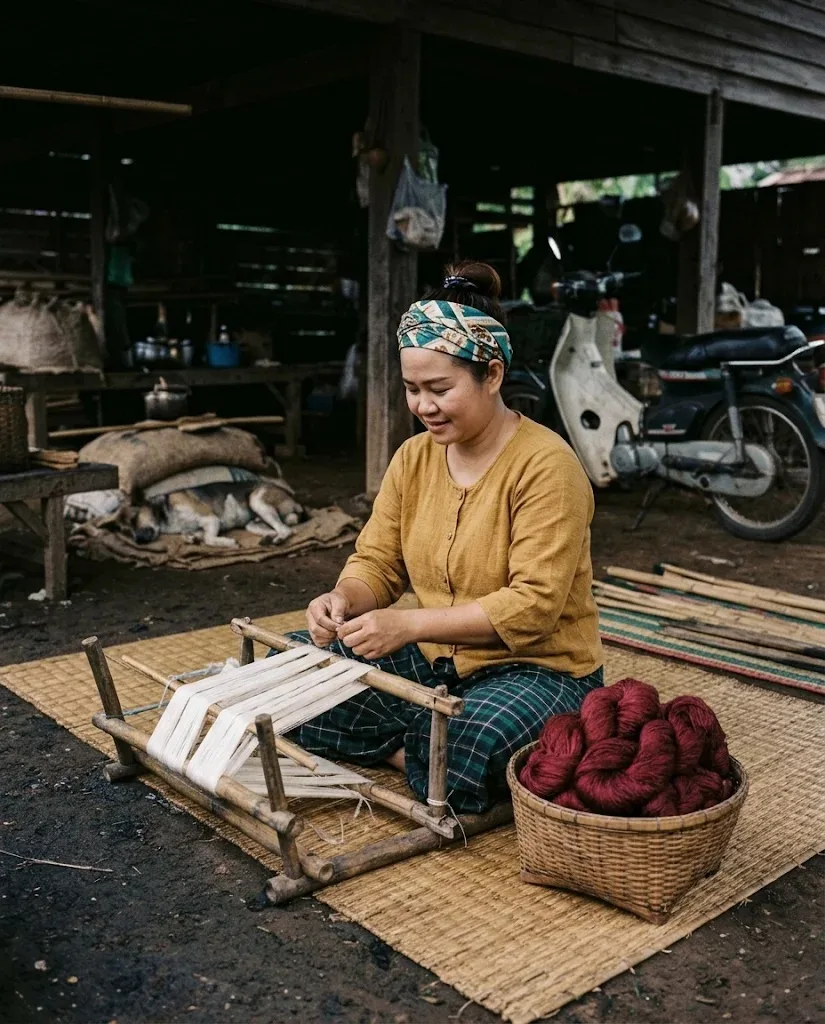
A weaver in a mustard shirt tying small bindings onto white silk threads on a wooden frame, before dyeing, in a village near Khon Kaen

Khon Kaen, Isan

Mudmee silk

Mudmee means "to tie and dye." Before she starts to weave, the weaver ties tiny bindings around the silk threads and dips them in dye. The tied spots stay undyed.

Then she unties them, ties new spots, and dyes again. Only after every round does she sit down at the loom. The threads already carry the pattern, and the weaving sets it in place.

That is where the soft, blurred edges on the Open Mudmee Coat and the Mudmee Wrap Skirt come from. It is not a printing flaw. It is the only way to get this pattern.

Made from this fabric

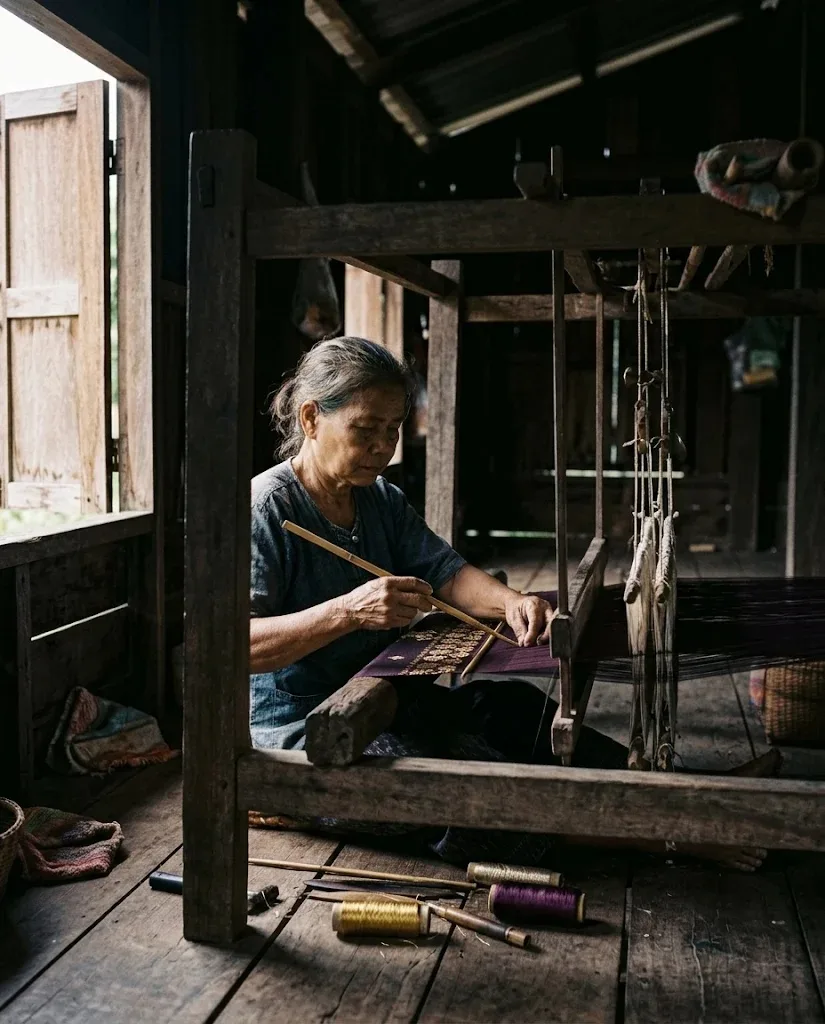
A weaver at a large wooden loom in a wooden house in Lamphun, lifting threads with a thin stick to weave a gold flower into purple silk

Lamphun

Yok dok

Yok dok means "lifting flowers." The weaver lifts single warp threads by hand and slips a gold thread beneath them. That is how each small flower forms, thread by thread.

Lamphun has woven this way for hundreds of years. The cloth was once kept for ceremonial dress alone. One bolt takes a weaver about a month.

Our last bolt made only a few Yok Dok Tops. When they are gone, we wait for the next bolt.

Made from this fabric

Also on the rail

Weaves that arrive in small batches

Wear something woven by hand

Every piece has its own page, telling you which village the cloth came from and how many days it took to weave.

See the full collection